The Elmendorf Tear Multiplier Effect on Accurate Textile Testing
Understanding Elmendorf Tear Testing
The Elmendorf tear test is a crucial method for evaluating the tear resistance of various materials, especially in the textile and packaging industries. As manufacturers and researchers strive for better quality and performance, understanding the nuances of this testing method becomes paramount. This article delves into the intricacies of the Elmendorf tear test, the technology behind modern testing devices like the ElmenGuide Elmendorf Tester, and the relevance of such assessments in industry standards and applications.
When exploring options, elmendorf tear testers provide comprehensive insights into material durability, thus ensuring quality assurance across various sectors.
What is the Elmendorf Tear Test?
The Elmendorf tear test is designed to determine the force required to propagate a tear in a material, typically textile or paper. This test evaluates how well a fabric can withstand tearing, which is essential for product durability and performance. During the test, a specimen is cut to create a notch, and a pendulum is released to tear the material. The energy lost during the pendulum’s swing is measured, which correlates to the material’s tear strength.
Historical Context and Development of Testing Standards
The concept of measuring tear strength dates back over a century, evolving significantly with advancements in technology and material science. Initially, testing methods were rudimentary, involving manual calculations and basic equipment. The Elmendorf tear method, standardized in the 1950s, introduced a more systematic approach, leading to the establishment of international standards, including ISO 13937-1. These standards ensure consistency and reliability in test results, which are paramount for industries reliant on material strength.
How the Test Measures Tear Resistance
The mechanics of the Elmendorf tear test involve a pendulum, which is released from a specific height to ensure consistent potential energy. The sample is fixed in place, and a precisely measured notch is created. As the pendulum swings down, it impacts the material, tearing along the notch. The key measurement of interest is the force necessary to propagate this tear, quantified in newtons (N). This process highlights the material’s inherent weakness and enables manufacturers to make informed decisions about their products’ quality.
Technology Behind the ElmenGuide Elmendorf Tester
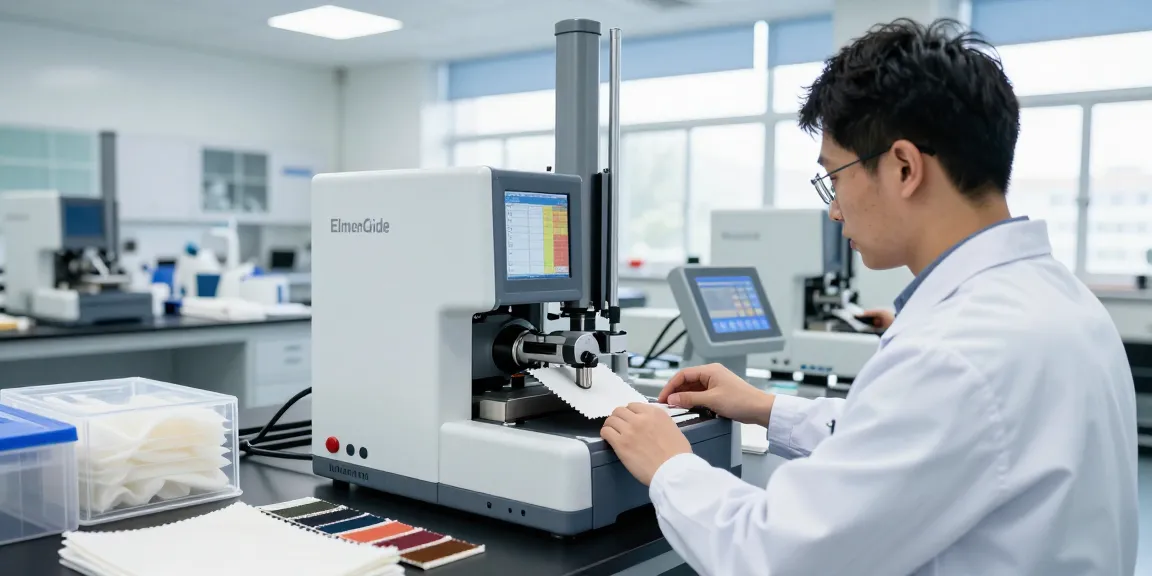
The advent of technology has transformed the traditional Elmendorf tear test into a more efficient and reliable process. The ElmenGuide Elmendorf Tester embodies these advancements, offering features that not only enhance accuracy but also simplify the testing procedure.
Key Features of the ElmenGuide Tester
- Fully Automated Testing: The ElmenGuide tester automates the entire testing process, from sample recognition to data analysis, minimizing the risk of human error.
- High Precision: With an accuracy of ±0.2%, this tester ensures reliable results for a variety of materials.
- User-Friendly Interface: Designed with the operator in mind, it offers an intuitive interface that simplifies the operation, even for new technicians.
- IoT Integration: The ElmenGuide features connectivity options that allow for real-time data monitoring and management through smartphones or PCs, enhancing overall efficiency.
Comparison: ElmenGuide vs. Traditional Tear Testers
While traditional tear testers rely heavily on manual input and calculations, the ElmenGuide Elmendorf Tester stands out with its fully automated process. Traditional testers often require multiple adjustments and can lead to inconsistencies in readings, particularly in high-volume testing environments. In contrast, the ElmenGuide’s automation streamlines the testing process, ensuring uniformity and reducing the risk of operator-induced errors.
Importance of Automation in Testing Accuracy
Automation in tear testing not only enhances the accuracy of results but also significantly reduces testing time. By minimizing manual handling, the ElmenGuide tester ensures that data integrity is maintained, making it ideal for quality control labs and manufacturing environments where speed and reliability are critical.
Application Scenarios for Elmendorf Tear Testing
As industries continue to evolve, the applications of Elmendorf tear testing have expanded significantly. This section outlines the primary use cases for this vital testing method.
Usage in Textile Manufacturing and Quality Control
In textile manufacturing, the Elmendorf tear tester is indispensable for evaluating the strength and durability of fabrics. Quality assurance teams utilize this testing method to ensure that materials meet industry standards before they are used in final products, such as clothing or upholstery. Regular testing helps manufacturers identify weaknesses early in the production process, allowing for adjustments that enhance product longevity.
Applications for Laminated Materials and Plastics
The versatility of the Elmendorf tear test extends beyond textiles, proving equally effective for laminated materials and plastic films. These materials often require specific performance characteristics, and the tear test enables manufacturers to validate that their products fulfill these requirements. For instance, in packaging, ensuring that a film can withstand stress during transportation is crucial for maintaining product integrity.
Academic Uses in Research and Development
Academic institutions and research organizations leverage the Elmendorf tear test for material studies and experiments. Understanding the tear resistance of new materials plays a critical role in developing innovative textiles and composites. The automated nature of modern testers allows researchers to gather data efficiently, facilitating advanced studies in material science.
Compliance and Industry Standards
Compliance with international testing standards not only assures product quality but also opens markets across different regions. The Elmendorf tear tester plays a pivotal role in helping companies meet these requirements.
International Testing Standards Addressed
The ElmenGuide Elmendorf Tester is designed to comply with established international standards, such as ASTM D1424 and ISO 13937-1. These standards dictate testing protocols that guarantee consistent results across different laboratories and manufacturers. Compliance with these standards fosters trust among consumers and businesses alike, ensuring that products can be sold in various markets without additional testing.
Understanding ASTM and ISO Regulations
The American Society for Testing and Materials (ASTM) and the International Organization for Standardization (ISO) set the benchmarks for materials testing. Knowledge of these regulations is essential for manufacturers who wish to market their products globally. Adhering to ASTM and ISO standards not only enhances product credibility but also assures customers of the quality and reliability they can expect.
Impact of Compliance on Market Access
In today’s competitive landscape, compliance with international standards is paramount for gaining market access. Products that do not meet these testing requirements may face restrictions and rejection in certain markets. Therefore, utilizing an Elmendorf tear tester not only helps in quality assurance but also is a strategic investment for companies looking to expand their market reach.
Future Trends in Textile Testing and Technology
The landscape of textile testing is evolving rapidly, influenced by technological advancements and market demands. Understanding these trends is crucial for manufacturers and researchers aiming to stay ahead.
Emerging Technologies in Quality Control
As IoT and smart technologies become more prevalent, testing equipment like the ElmenGuide Elmendorf Tester is adapting to include these innovations. Future testers are expected to incorporate advanced analytics and machine learning capabilities, enabling predictive maintenance and enhanced performance monitoring. This shift toward smart testing solutions will undoubtedly increase efficiency and accuracy in material assessments.
Impact of IoT and Connectivity
The integration of IoT technology into testing equipment allows for real-time data tracking and analysis. This connectivity means that manufacturers can monitor their testing processes remotely, enabling faster decision-making and improved quality control. Future advancements will further blur the lines between hardware and software, providing an integrated experience for users.
Predictions for 2026: Innovations in Tear Testing
Looking toward 2026, we can expect significant innovations in tear testing methodologies and equipment. Automation will continue to play a crucial role, while AI-driven analytics will provide deeper insights into material performance. Manufacturers must prepare for these changes to remain competitive, ensuring they invest in the latest testing technology to maintain product integrity and regulatory compliance.
How to Maintain and Calibrate Your Elmendorf Tester?
Regular maintenance and calibration of the Elmendorf tear tester are vital for ensuring its accuracy and longevity. It is recommended to perform routine checks of the pendulum and calibration weights to ensure consistent performance.
Benefits of Regular Maintenance and Care
Proper maintenance not only extends the life of the testing equipment but also guarantees the reliability of results. Consistent performance checks lead to accurate readings, which are essential for quality control processes.
What to Look for When Buying an Elmendorf Tester?
When considering an Elmendorf tester, look for features such as automation, user-friendly interfaces, compliance with international standards, and connectivity options like IoT integration. Assessing these aspects will ensure that the equipment meets your quality control needs effectively.