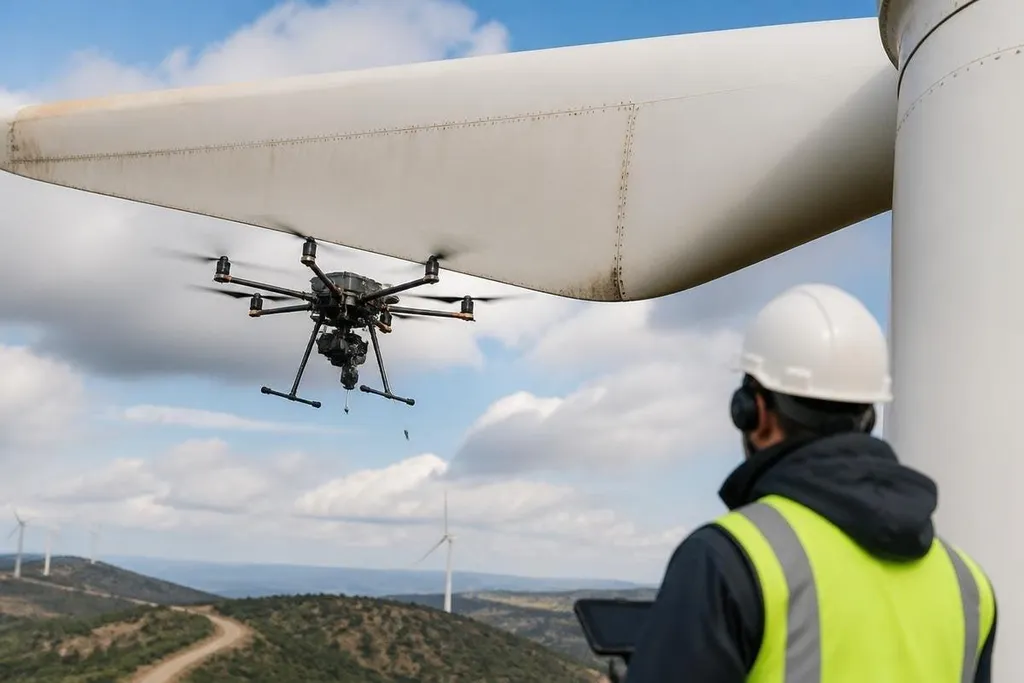
A drone can reach a wind turbine blade without sending a technician up a rope or inside a lift basket. Repairing that blade is a different task: the aircraft must hold position near a moving structure, carry tools or parts, and work safely around people and equipment.
For a wind farm operator, the useful question is not whether a drone can fly to a turbine. It is which repair jobs the drone can complete, and which still need a trained crew.
- Inspection comes first: cameras can check blades, towers, and cable routes from a distance.
- Small repairs look more practical: a drone may handle sealing, coating, or sensor work before heavy mechanical jobs.
- The hard limit is control: wind, rotor movement, payload weight, and contact with the blade all reduce room for error.
Inspection is the easier job
A drone can carry a camera around a blade and send images to a technician on the ground. That gives the team a close view of cracks, surface wear, lightning damage, loose material, or other changes that need a closer check.
The aircraft does not need to touch the turbine for this work. It can keep a gap from the blade and follow a planned route. Consistent images can help an operator compare a defect over time instead of relying on a short visit and memory.
That does not make inspection automatic. Image quality depends on distance, light, weather, camera angle, and the skill of the person reviewing the footage. A drone can point to a possible fault; a qualified technician still needs to decide what the fault means.
Contact makes repair harder
Repair needs contact. A tool must press against the blade with enough force, stay in the right place, and avoid slipping across a curved surface. Rotor blades are also large structures exposed to wind, so the air around them may shift as the aircraft moves.
The aircraft may carry a brush, nozzle, sensor, or light tool. That could support work such as applying a sealant, adding a surface coating, or checking a component after a technician has prepared the repair. The exact job depends on the drone’s payload, control system, attachment method, and the material being handled.
Heavy work is a different case. Replacing a damaged section, removing a large part, or tightening a major fastener needs force and stable support. A drone that carries more weight also needs more lift, which can shorten flight time and make close control harder.
The operator still matters
Planned flight can use cameras, position sensors, and software that keeps the aircraft near the blade. That helps with repeatable inspection paths, but it does not remove the need for people.
The operator has to check weather, set a safe work area, watch the aircraft, and stop the task if the drone loses position. The repair plan also needs a clear handoff: the drone records the defect, a technician confirms the work, and another inspection checks the result.
A drone that spots a blade crack still needs a repair record a technician can check. For a wind farm manager, Robot24 can help place the aircraft, blade section, sensor data, and human handoff beside the claim, so the next test is clear: can the full repair process work safely at height?
What a workable repair system needs
A useful system needs more than a drone and a camera. Check these points before planning a trial:
- Name the repair: define the exact task, surface, tool, and expected result.
- Measure the payload: include the tool, cable, liquid, battery change, and any safety hardware.
- Set weather limits: write down the wind, rain, temperature, and visibility limits for flight.
- Plan contact control: decide how the drone will press, hold, release, and recover from a failed contact.
- Keep a human check: require a technician to approve the defect, repair, and follow-up inspection.
The first useful deployments will probably pair drones with ground crews. The aircraft can reduce climbing and inspection work, then handle narrow repair steps under human supervision. That approach leaves the heavy lifting, complex access decisions, and final sign-off with people who already know the turbine.
I'd wait for evidence from a full maintenance task, not a short flight beside a blade. The deciding proof will be a repeatable repair that leaves the turbine ready to run, with a clear record of what the drone did and what the crew still had to do.